THE ART OF THE SANDBAG: HOW TO SURVIVE THE NIGHTLY KITCHEN RUSH
Every seasoned line cook knows that dreaded feeling when the printer starts humming and won’t stop. The tickets keep stacking up, the expo is calling out times, and you are officially in the weeds. When the kitchen gets slammed, you need an edge. That is where the art of sandbagging comes in. Done incorrectly, sandbagging is a great way to serve dead, dried-out food and ruin a restaurant’s reputation. But when you do it right, it is a masterclass in kitchen efficiency that keeps your station running smoothly.
When you absolutely know a specific high-volume item is going to sell out during a heavy weekend rush, you do not just precook it and let it die under a heat lamp. Instead, you use a strategic holding matrix based on your station equipment to stay steps ahead of the ticket spike without sacrificing an ounce of quality.
Here are three legendary professional kitchen hacks for sandbagging product during a busy night.
—
THE DOUBLE-PAN STEAM VAULT FOR PROTEINS
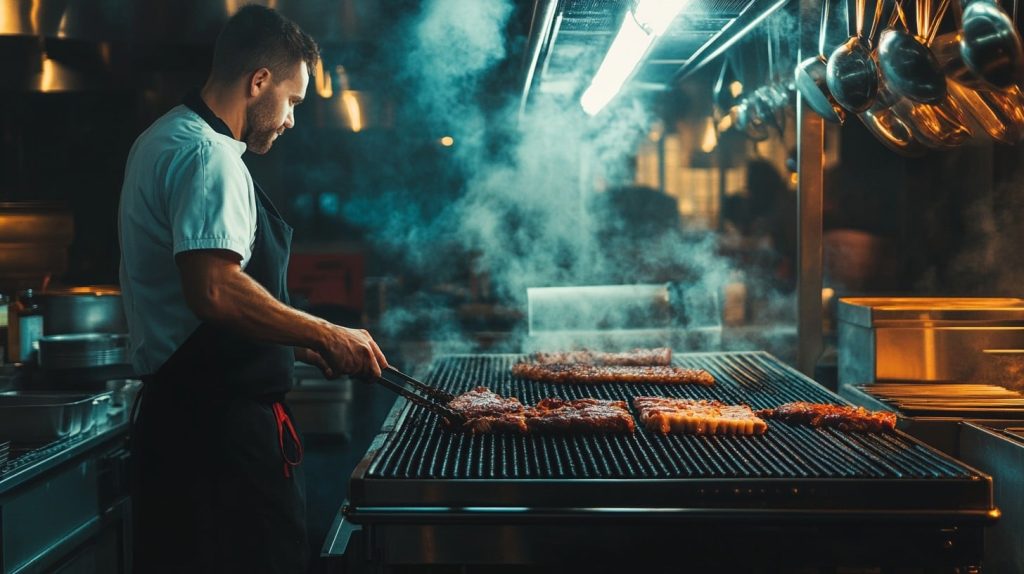
If you are running a high-volume grill or flat top station, proteins like chicken breasts, pork chops, or skirt steaks can easily create a massive bottleneck. To get ahead of the rush, you can pre-cook your meats to about eighty percent doneness using a clever humidity trick.
The Hack: Grab a deep third-pan or half-pan. Pour a small splash of flavorful stock, jus, or liquid butter into the very bottom. Next, drop a wire rack or a perforated pan inside so your meat sits elevated and does not actually touch the liquid.
The Execution: Hard sear your proteins on the grill or flat top to lock in the juices and get those beautiful char marks. Pull them off the heat just before they hit their actual temperature window. Drop them into the elevated perforated pan, slap a tight lid or aluminum foil over the top, and place the whole setup on the lowest heat section of your flat top or on a warm spot on the pass.
The Finish: When a new ticket prints, pull a portion from your vault and flash it in a hot pan with a splash of butter, or drop it back on the hottest spot of the grill for about forty-five seconds. This brings the exterior right back to life, hits the perfect internal temp, and keeps the meat incredibly juicy because it rested in an enclosed, humid environment.
—
THE DECONSTRUCTED SAUTÉ FOR FAST PASTAS
When you are getting absolutely crushed on the sauté station, the main bottleneck is rarely the actual cooking time. Usually, it is the precious minutes spent assembling individual ingredients and waiting for cold sauces to reduce.
The Hack: You want to pre-batch your initial aromatics and cooking fats into single-portion ramekins or deli cups, while par-cooking your noodles to exactly two minutes under al dente.
The Execution: Line up a row of sizzle platters or keep a deep hotel pan filled with your par-cooked, shocked, and lightly oiled pasta. Next to your pans, have your pre-portioned aromatic builds ready to go. For example, have your diced pancetta, minced garlic, and red pepper flakes already sitting together in the cooking oil inside a single deli cup.
The Finish: Instead of building the dish from scratch while the printer is screaming, you dump your pre-portioned oil and aromatic mix straight into a red-hot pan. Flash it for ten seconds to release the fragrance, drop the par-cooked pasta, and hit it with a heavy ladle of pre-heated sauce from your steam table. You just turned a five-minute pickup into a ninety-second sprint.
—
THE SIZZLE PLATTER FALSE BOTTOM FOR CRISPY ITEMS
If you are working the broiler or salamander station, sandbagging items that need to stay crispy or hold a specific shape, like crab cakes, loaded potato skins, or par-baked parms, can be a nightmare because they turn soggy on a standard hot tray.
The Hack: Create a elevated staging area right on top of or just beneath your pass using inverted sizzle platters to block direct heat.
The Execution: Fire six to eight portions of your popular appetizer or entree to about eighty-five percent completion. Line up a row of clean sizzle platters completely upside down on a warm surface, and place your par-cooked product directly on top of the inverted pans. The upside-down platter traps an air pocket underneath, which prevents the bottom of your food from getting soggy or scorched by direct contact with a hot flat top or pass shelf.
🥩 MASTERING THE BEEF AND FISH HOLD: HOW TO PRE-FIRE DELICATE PROTEINS 🥩
When the kitchen is in full swing, sandbagging chicken or pasta is one thing, but handling expensive beef proteins and delicate fish is a completely different beast. If you cook a ribeye or a piece of salmon too far ahead, it will continue to carry over, turn to rubber, and end up in the trash pan. But when you are staring down a massive reservation block or a Friday night rush where you know twenty steaks and salmon fillets are about to hit the board simultaneously, you cannot afford to start every single order from scratch.
To pull this off without serving grey meat or mushy fish, you have to master the art of the precision par-cook and understand how to stall the internal temperature.
Here is how you safely pre-fire and hold premium beef and delicate fish so they are ready to flash and fly the second the ticket drops.
—
THE REVERSE-SEAR HOLD FOR THICK-CUT BEEF
Trying to sandbag a medium-rare New York strip or ribeye by charring it early is a recipe for disaster because the residual heat will push it straight into well-done territory while it sits. Instead, you flip the cooking process completely on its head.
The Hack: Use a low-temperature holding environment to bring a large batch of steaks up to eighty degrees internally, bypassing the cold-center bottleneck.
The Execution: About thirty minutes before the rush hits, place your seasoned, thick-cut steaks on a wire rack inside a hotel pan. Put them into a low oven set to around one hundred and fifty degrees, or keep the pan on the highest, warmest shelf above your broiler line. You are not trying to sear the meat yet. You want to gently warm the steaks through until the chill is completely gone from the center.
The Finish: When the massive ticket drops for five medium-rare strips, you are not tossing ice-cold meat onto the grill. Because the steaks are already sitting warm and relaxed, they will take half the usual time to cook. Toss them onto a screaming hot grill or a smoking cast iron skillet. Get your hard char and grill marks on both sides instantly. Because the interior was already warm, the steak hits a perfect, juicy medium-rare in just a couple of minutes with zero grey banding around the edges.
—
THE SKIN-SIDE FLOATER FOR DELICATE FISH
Fish is notoriously unforgiving because the delicate proteins break down quickly, and the flesh dries out the moment it sits under a heat lamp. To sandbag a high-volume fish like salmon, sea bass, or halibut, you have to use the skin as a natural protective shield.
The Hack: Hard-sear the skin side only to create a rigid structure, then stall the cooking process immediately on a cold surface.
The Execution: Drop your fish portions skin-side down into a hot, oiled pan or onto a clean flat top. Press down firmly to ensure the skin gets completely flat and crispy. Let it cook on the skin side until the heat has traveled about one-third of the way up the fillet, showing a clear line of cooked white flesh at the base. Do not flip the fish. Immediately pull the fillets out of the pan and place them skin-side down onto a room-temperature sizzle platter away from direct heat.
The Finish: The crispy skin acts as an insulated plate, holding the shape of the fish and trapping the natural oils. When the order goes live, slide the sizzle platter directly under a roaring hot salamander or broiler for about ninety seconds, or flip it flesh-side down into a hot buttered sauté pan. The gentle ambient heat cooks the top of the fish perfectly, while the skin stays phenomenally crispy.
—
THE FLANK AND SKIRT STEAK ACID BATHE
Thin, fibrous cuts of beef like flank steak, skirt, or hanger steak are prime targets for getting buried during a rush because they cook quickly but can become incredibly tough if they rest incorrectly.
The Hack: Use a warm, acidic board sauce bath to hold par-cooked slices without letting them dry out.
The Execution: Fire your skirt or flank steaks on a blazing hot grill for just sixty seconds per side to get a heavy crust while keeping the interior completely rare. Pull them off, slice them thin against the grain, and submerge the slices into a warm third-pan filled with a mixture of beef jus, a splash of red wine vinegar, crushed garlic, and clarified butter. Keep this pan in a warm water bath on your steam table.
The Finish: The warm liquid stops the steak from oxidizing and turning grey, while the acid in the vinegar keeps the meat incredibly tender. When the ticket prints for steak tacos, fajitas, or a steak salad, grab a tongs-full of the sliced beef, toss it onto the hottest part of the flat top for ten seconds to flash away the excess moisture, and plate it immediately. It will taste like it was sliced fresh to order.
—
THE CRITICAL TEMPERATURE WARNING
The secret to sandbagging premium proteins is making sure you do not cross the line into the danger zone for too long. Keep your holding windows tight, never let fish sit for more than ten to fifteen minutes before finishing, and make sure your finishing heat is high enough to instantly wake the protein back up. Master these timing patterns, and you will own the line during the heaviest rush of the night.
The Finish: When the ticket hits the board, slide the product right side up onto a fresh sizzle platter, top it with your cheese or final sauce, and blast it under the high heat of the salamander for a perfect, crispy finish.
Obviously not all these hacks will work for you or your station or your kitchen. The idea is to apply yourself, stay ahead of the game anticipating and feeling the rush.
—
THE GOLDEN RULE OF THE KITCHEN
Never sandbag more than what you can realistically flush down the line in a fifteen-minute window. If the board clears and those holding pans are still full of pre-cooked food, you did not sandbag successfully. You just wasted product and killed your food cost. Use these hacks wisely, keep your station clean, and dominate the line tonight.