Pre-Shift: Are Your Lines Actually Ready?
The 15 minutes before doors open decide whether your service runs like a clock or spirals into chaos. Too often, “line ready” means cooks parked at their stations, watching the printer for the first ticket. But real line readiness isn’t about bodies in position it’s operational alignment, station integrity, and pace-setting.
A proper pre-shift check hits three pillars: Station Setup, Sanitation and Safety, and Team Readiness.
Here’s the pre-service protocol every kitchen manager, chef, or line supervisor should run before the first ticket drops.
1. Station Integrity and Mise en Place
A station isn’t ready just because the insert pans are full. It’s ready when the workflow demands zero wasted movement at peak ticket velocity.
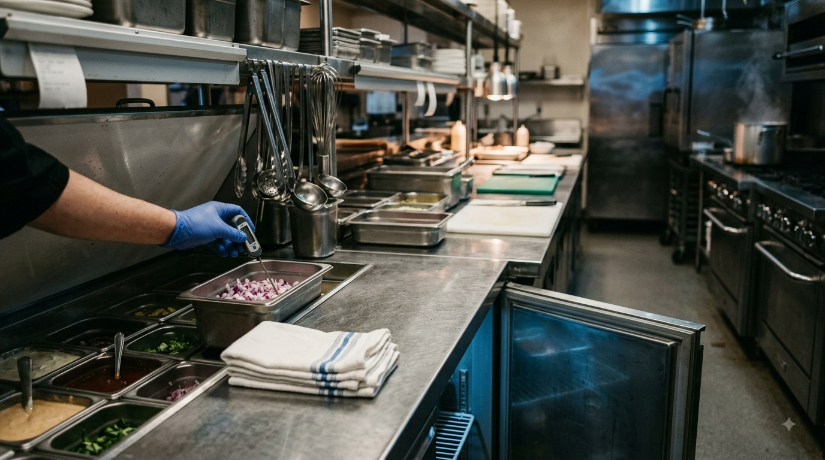
Temperatures and food safety. Cold-holding units (low-boys, reach-ins, prep tables) must hold at 41°F (5°C) or below. Hot-holding units (steam tables, soup wells) must hold product at 135°F (57°C) or above. Confirm with a calibrated probe thermometer not the unit’s built-in display.
Backup stock and par levels. Every station needs secondary prep stocked in immediate station refrigeration or designated line backups. A cook who leaves the line during a 7:00 PM rush to grab extra sauce from the walk-in kills momentum and drags down ticket times across every station.
Tool and utensil audit. Every station needs dedicated, sanitized tongs, ladles, spatulas, and portion scoops per product to prevent cross-contamination. Lock down knife boards with non-slip mats underneath, and keep damp wiper towels stocked at proper sanitation points — never lying flat on working surfaces.
2. Sanitation, Safety and Regulatory Standards
Health department rules and OSHA guidelines aren’t just for inspection day they set the baseline flow and safety of the kitchen floor.
Sanitizer buckets. Mix fresh sanitizer (Quat or chlorine at proper PPM, confirmed with test strips), label it, and place it at every active station with clean wiping cloths submerged.
Handwashing stations. Stock warm water (100°F minimum), hand soap, paper towels, and a trash receptacle. Keep prep equipment and dishes clear of access.
Floor and pathway safety. Keep line mats clean, flat, and free of grease or debris. Keep pathways to the pass, dish pit, and walk-ins completely unobstructed.
3. Communication, Specials and Station Sync
Physical prep means nothing if the team isn’t mentally locked into the menu and the execution plan.
The line touch-base. Run a 90-second alignment call at the pass before doors open:
Flag low-inventory items or immediate 86 risks.
Cover daily specials, target cook times, and any allergy or dietary prep protocols.
Set clear lead and follow roles for call-outs during high-volume pushes.
Ticket and KDS verification. Run a test ticket through the Kitchen Display System or impact printers. Confirm fresh paper rolls are loaded, bump bars respond, and timer alerts fire.
The pass setup. Load the expediter station with clean service towels, fresh garnishes, plate wipes, tray jacks, finished sauce squeeze bottles, and plate warmers running at temp.
The Pre-Shift Line Rule
If you have to step off the line in the first 60 minutes of service to grab basic supplies, your station wasn’t ready.
Standardize this checklist and you build consistency, protect your food costs, control your ticket times, and put your team in charge of the shift instead of letting the shift run them.
2 thoughts on “Pre-Shift: Are Your Lines Actually Ready?”