
Master the Line: A Practical Guide to Kitchen Communication
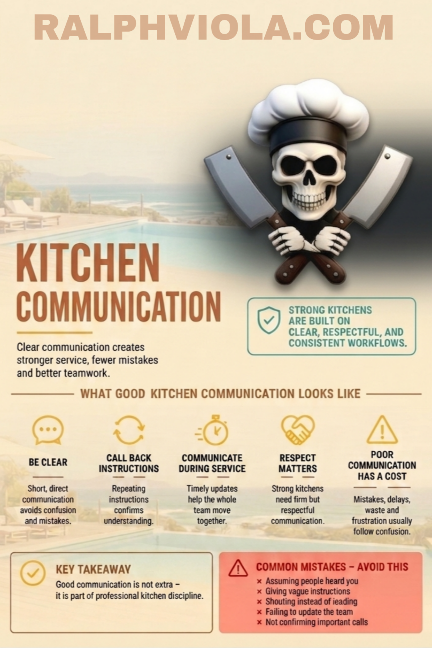
In a high-intensity kitchen, clear communication isn’t a luxury or an extra, it is a fundamental professional discipline. When a dinner rush hits, the difference between a synchronized, smooth service and complete chaos on the line comes down to how well your team speaks, listens, and responds. Poor communication carries a direct cost: costly mistakes, tickets running long, wasted prep, and a team that burns out from frustration.
To build a strong, resilient, and respectful kitchen culture, every team member must master five core pillars of communication during service.
The 5 Pillars of High-Impact Kitchen Communication
1. Be Clear
Every call on the line must be short, direct, and unambiguous. A busy kitchen is filled with ambient noise, sizzling pans, clattering plates, and the hum of the hood vents. Long, winding explanations get lost in the noise. Speak from your diaphragm, state exactly what you need or what you are doing, and avoid vague language. Short, direct communication eliminates confusion on the line and stops mistakes before they happen.
2. Call Back Instructions
Communication is a two-way street; an unacknowledged order is a mistake waiting to happen. Whenever a ticket is fired, a modifier is called out, or a lead hand gives a directive, you must repeat the instruction back immediately. Hearing a team member echo “Firing two ribeyes, working!” or “Hearing chef, all-day is three salmon!” confirms absolute mutual understanding. Never assume a teammate heard you until you receive a direct call back.
3. Communicate Continuously During Service
A kitchen is a fluid environment where ticket times change in seconds. Timely, real-time updates keep the entire team synchronized. Let your teammates know your timing by calling out pieces of information like “Two minutes on the halibut!” or “Behind you with hot pans!” Constant, proactive tracking allows everyone on the line to adjust their station timing dynamically, ensuring all plates for a table hit the pass perfectly together.
4. Respect Matters
Strong kitchens require firm, fast-paced leadership, but service should never devolve into hostility. Respectful, professional communication keeps the team grounded when pressure mounts. Treating your coworkers with professional respect builds trust, lowers unnecessary stress, and ensures that when critical corrections are called out, they are received constructively rather than personally.
5. Understand the Cost of Poor Communication
When communication breaks down, the entire operation pays the price. A missed modifier means a plate gets sent back. A failure to update the line on a ticket delay throws off everyone else’s execution, leading to dead food on the pass. Recognizing that your voice directly impacts kitchen profitability and guest satisfaction shifts your mindset from merely cooking to actively managing the flow of the room.
Common Pitfalls to Avoid on the Line
To maintain high standards during a grueling shift, actively police your station against these common operational mistakes:
– Assuming people heard you: Never throw a call out into the void and walk away. Wait for eye contact or an explicit call back.
– Giving vague instructions: Phrases like “I need that food soon” cause panic. Use exact times, such as “Give me a hard two minutes on that side.”
– Shouting instead of leading: Raising your volume out of frustration breaks focus. Keep your tone firm, authoritative, and controlled.
– Failing to update the team: If your station falls behind on a prep item or a protein, call it out immediately so the wheel can adjust the board.
– Not confirming important calls: If a high-priority ticket or an allergy alert is called, verify that every single station has acknowledged it.
The Bottom Line
Great kitchens aren’t just built on culinary talent; they are built on clear, respectful, and consistent workflows. When you treat kitchen communication as a core discipline, mistakes drop, efficiency skyrockets, and teamwork becomes second nature. Clean up your calls, demand accountability on your backs, and lead your line by example every single night.

1 thought on “Master the Line: A Practical Guide to Kitchen Communication”