
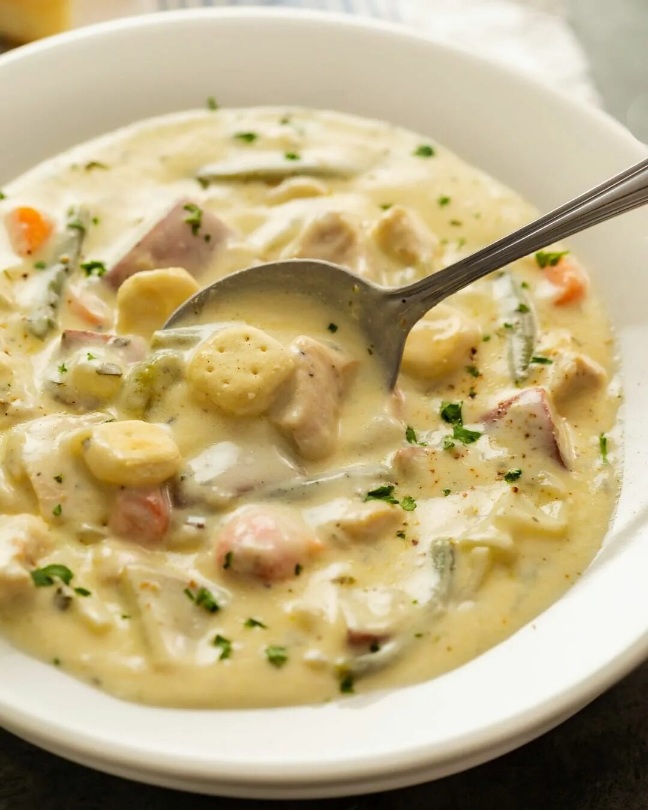
Chicken and Dumplings
The history of chicken and dumplings in America is a narrative of necessity, geography, and the slow-simmered evolution of comfort. While the dish is now a permanent fixture of Southern iconography—sitting alongside biscuits and fried chicken—its lineage is a complex tapestry woven from European techniques, colonial ingenuity, and the harsh realities of the Great Depression.
The European Blueprint
The concept of the “dumpling” did not originate on American soil. Nearly every global cuisine has a version of dough boiled in liquid, from the Polish pierogi to the Chinese jiaozi. However, the American version draws its most direct inspiration from the suet puddings and “boiled dough” of British and Germanic traditions. In the 17th and 18th centuries, European settlers brought recipes for savory pastries that were poached in stews to stretch a meager meat supply.
Early American cookbooks, such as Mary Randolph’s The Virginia House-Wife (1824), describe variations of meat stews with suet-based doughs. During this era, chicken was not the ubiquitous protein it is today; it was a luxury reserved for special occasions or for birds that had outlived their usefulness as egg-layers. These older, tougher “stewing hens” required hours of low-temperature simmering to become palatable, a process that naturally yielded the rich, golden broth that defines the dish.
The Great Divide: Rolled vs. Drop
As the recipe moved across the American frontier, a regional schism emerged regarding the texture of the dumpling itself. This debate remains one of the most spirited in American culinary circles.
1. The Appalachian “Slick”: In the Mid-Atlantic and parts of the South, the “rolled” dumpling reigns supreme. These are essentially thick, unleavened noodles—dough rolled thin, cut into squares, and dropped into boiling broth. The starch from the flour acts as a natural thickener, turning the stock into a silky, gravy-like consistency.
2. The Southern “Pillow”: Further south and into the Midwest, the “drop” dumpling is more common. These utilize leavening agents like baking soda or powder to create airy, biscuit-like mounds that steam on top of the broth.
The Great Depression and the Rise of Comfort
If the 19th century established the dish, the 1930s cemented it as an American staple. Chicken and dumplings is the ultimate “stretch” meal. During the Great Depression, a single chicken could be transformed into a feast for a large family by adding a significant volume of flour and water. It was during this era that the dish moved from being a regional specialty to a symbol of domestic resilience.
The mid-20th century introduced further refinements. The advent of modern poultry farming made chicken more affordable, and the introduction of “convenience” foods led many home cooks to use canned biscuits or pre-made mixes. Yet, the professional kitchen has always maintained a reverence for the scratch-made version, focusing on the clarity of the stock and the precise hydration of the dough.
A Modern Legacy
Today, chicken and dumplings serves as a bridge between the rustic past and the modern table. It is a dish that demands patience; it cannot be rushed, as the dumplings require a steady, gentle poach to avoid becoming gummy. For the modern American, it is more than just a caloric necessity—it is a sensory link to a heritage of “making do” and a testament to the fact that the simplest ingredients, when handled with technique and care, can produce the most profound satisfaction.
Chicken and Dumplings
Ingredients
The Foundation (The Velouté)
- Chicken: 1.5 lbs chicken breast or thighs poached and shredded (save the poaching liquid).
- Stock: 6 cups high-quality bone broth or fortified chicken stock.
- Aromatics: 1 cup diced celery and 1 cup diced onion sautéed until translucent.
- Thickener: 1/4 cup heavy cream or a light roux using butter and flour if a thicker consistency is desired.
- Seasoning: Fresh thyme cracked black pepper, and a touch of sea salt.
The Dumplings (High-Rise Style)
- 2 cups all-purpose flour
- 1 tbsp baking powder
- 1 tsp salt
- 3 tbsp cold butter cubed
- 3/4 cup whole milk or heavy cream
Instructions
- The Base: Bring the chicken stock and sautéed aromatics to a gentle simmer in a wide, heavy-bottomed pot. Add the shredded chicken and seasoning. Ensure the liquid is flavorful and well-balanced before proceeding.
- The Dough: In a separate bowl, whisk the dry ingredients. Cut in the cold butter until it resembles coarse crumbs. Gently fold in the milk until just combined; do not overwork the gluten, or the dumplings will become dense and rubbery.
- The Poach: Bring the liquid to a steady simmer (not a rolling boil). Using a small scoop, drop rounded tablespoons of dough onto the surface of the liquid.
- The Steam: Cover the pot tightly with a lid. Reduce heat to low and cook for 12–15 minutes without lifting the lid. This trapped steam is what creates the airy, pillowy texture.
- Finish: Stir in the cream at the very end for a glossy finish. Garnish with fresh parsley.