The Ultimate Guest Experience: Front of House Strategies for Repeat Visit
1. The Welcome: Crafting a Genuine Invitation
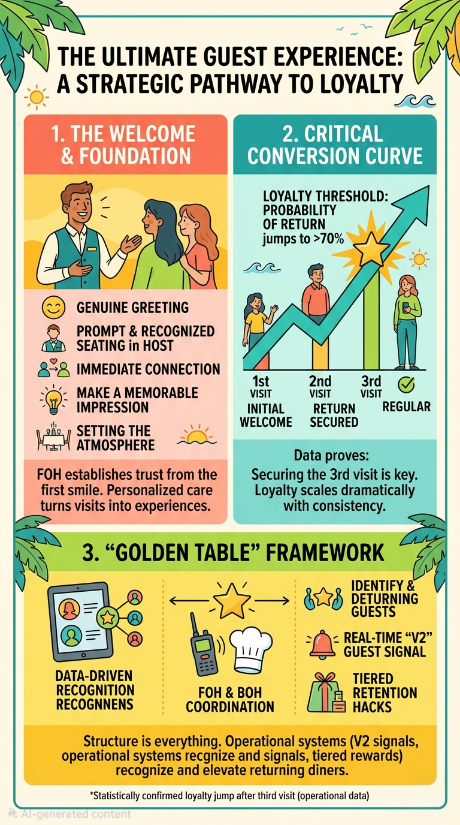
The ultimate guest experience begins the moment a patron walks through the door. A warm, immediate greeting sets a positive tone and makes people feel instantly valued. This is more than a polite “hello.”
Key FOH Actions:
The Power of the Smile: A genuine, warm smile makes a profound psychological impact, immediately conveying friendliness and openness.
Prompt Seating & Recognition: Guests should not have to wait to be acknowledged. If a wait is required, it must be communicated clearly and managing with a comfortable area.
Making an Impression: FOH staff should be trained to be perceptive, noticing details about the party (e.g., celebratory occasions, specific needs) and personalizing the initial interaction. The first visit must feel distinct and memorable.
Setting the Atmosphere: Every detail, from table settings to ambient noise and cleanliness, reinforces the message, “We were expecting you.”
2. The Conversion Curve: Securing the Second and Third Visits
The ultimate goal of front-of-house excellence is to turn a first-time guest into a regular. Industry data indicates that a guest’s loyalty follows a powerful conversion curve where the probability of return jumps dramatically after they have successfully navigated their initial experiences.
Key FOH Strategies for Repeat Business:
The Critical Third Visit:
Research and operational data (e.g., from the user’s focus on operational manuals) show that a guest who visits a restaurant for a third time has a probability of return exceeding 70%. This is the loyalty threshold.
Immediate Capture: To build this critical momentum, the focus must shift from a generic welcome to a structured approach for recognizing returning diners. This requires coordinated front-of-house and back-of-house actions (e.g., real-time “V2” guest signals).
The “Golden Table” Protocol: Implement distinct operational procedures for identifying and delivering elevated service to returning guests. Tiered retention tactics should be codified into comprehensive training manuals.
Data-Driven Recognition: Leverage guest data and reservation systems to recognize returning patrons, addressing them by name and recalling their previous preferences to foster a sense of personal connection.
Structured Hospitality: High-level hospitality is not accidental; it depends on robust operational structures, adequate staffing, and systems that minimize decision fatigue for staff, enabling them to focus on genuine guest engagement.
The weekend kitchen audit: a practical guide to restaurant economics
Survival Strategies When Your Answer Isn’t a Bottle or a Fight