Beyond Stretching: Real Ergonomics for Line Cooks
I used to think stretching was enough; roll the neck, shrug the shoulders, bend over like I’m praying. Felt good after shift and break, still do it. But I’d still limp home, spine screaming, feet numb. Conpcrete floors don’t forgive. Low counters force you hunch. Overhead pots yank your shoulders. Repetitive chops? Wrists turn to fire. That’s why half the old-timers I know are out by forty; back shot, knees gone. OSHA calls it MSDs. I call it “why I can’t stand straight anymore.”
Stretching loosens you up, sure. But it doesn’t fix the kitchen. You need setups; gear that keeps you alive long-term. And yeah, ask for help. Don’t play hero. Tell the chef, “I need a mat, a stool.” Silence costs you. Bosses know OSHA pushes this stuff; ask early, get it done.
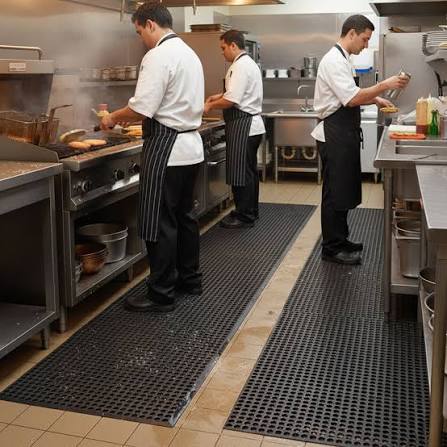
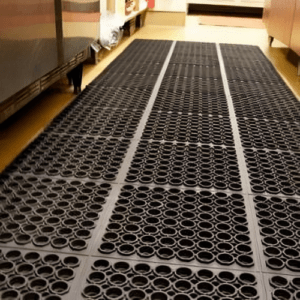
Take mats. Anti-fatigue ones; thick, cushioned, non-slip. Step on one mid-rush, it’s like the floor turns soft. Feels unreal, like you’re floating. But here’s the truth: nobody wants’em. Cleaning is brutal, drag’em out every night after getting destroyed for dinner service, scrub grease, hose spills, wipe the floor underneath. Grease sticks like tar. Someone always ends up with the chore. In my old spots, it was side work: dishwashers, porters, whoever’s last out. Not dumped on the new guy; just shared hell. Some kitchens skip’em; OSHA recommends, doesn’t require. If you want one? Own it. Bring yours, clean yours. No begging. One extra minute beats years of pain. Trust me; I stand without’em now, and I can barely walk sometimes.
Posture is everything. Core tight, shoulders back, chin tucked; no slouching. Raise or lower counters so your elbows hang naturally. Face what you’re chopping instead of twisting. Alternate feet on the rail.
Lifting? Bend at the knees and hips, keep your back straight, and hold the load close. Make multiple trips instead of giving yourself a hernia, ask for help.
Use smart tools: bent-handle knives, powered choppers, and rolling carts. Keep everything stored between knee and shoulder height.
Take micro-breaks when you can; two minutes every hour to walk and shift your weight. Rotate tasks: chop, plate, clean.
Look, I’m not delusional. I know there are no two-minute breaks in the middle of a rush when you’re a line cook. But the principle still matters.
Skechers-New balance-Crocs(bistros) won’t break you.
Shoes: rotate them daily or every other day. Birkenstocks one shift (cork molds to your feet; pure arch heaven after the break-in), New Balance the next (cushy bounce). Switching them varies the pressure and stops foot pain before it starts.
Stationary prep? Crocs on a mat. Wide feet swear by them; but narrow feet often find they slide. Wear ankle wraps if you’re on the move. Incorporate compression stockings. Runners wear them.
Get a recliner and use it, or pay for it later. Elevate your feet after every shift, even if you think you don’t need to.
The golden rule (I know it’s tough):
For every hour you spend on your feet, spend the same amount of time off them.
Bottom line: If you’re still grinding after everyone tried to talk you out of it, listen. The vets who’ve been there, done that, and got the t-shirt aren’t lying. Ergonomics isn’t yoga, it’s survival. Mats, proper posture, smart lifts, and asking for help aren’t optional. Do them, or you’ll be done and working as a paper chef after 35.