Understanding Emulsification
Emulsification is the art of forcing two naturally hostile liquids—like oil and water—into a smooth, stable partnership. Without it, your dressings separate into greasy pools and watery vinegar. With it, you get silky mayonnaise, glossy vinaigrettes, and rich hollandaise.
In a professional kitchen, mastering this technique is non-negotiable. It improves mouthfeel, keeps flavors balanced, and ensures your sauces look intentional rather than broken.
The Mechanics: Three Elements
To lock down an emulsion, you need three things:
1. Two Phases: A fat phase (oil, butter) and a water phase (vinegar, citrus juice, stock).
2. Mechanical Force: Whisking, blending, or shaking to shatter the fat into tiny droplets.
3. An Emulsifier: A bridge ingredient—like egg yolk, mustard, honey, or garlic—that binds water and fat together so they cannot separate.
The Two Classes of Sauces
– Temporary Emulsions: Unstable mixtures that separate quickly, like a classic oil-and-vinegar house dressing. Just shake and pour before service.
– Permanent Emulsions: Stable mixtures built to hold together for service, like mayonnaise or hollandaise.
Pro Tip: Temperature matters. Room-temperature ingredients emulsify far easier than ice-cold ones. Always add your fat slowly at first. If you dump it in too fast, the emulsion will break. If it does break, don’t throw it out—start a fresh base with a splash of water or yolk, then slowly whisk the broken sauce back into it to reset the bond.
=========================================
MASTER RECIPE: BASIC MAYONNAISE
=========================================
Yield: Approx. 1 cup
Ingredients:
– 1 large egg yolk (room temperature)
– 1 tbsp fresh lemon juice or white wine vinegar
– 1 tsp Dijon mustard (the stabilizer)
– 0.5 tsp salt
– 1 cup neutral oil (canola or light olive oil—avoid extra-virgin as high-speed shearing turns it bitter)
Hand Method:
1. Whisk the yolk, acid, mustard, and salt in a bowl for 30 seconds until slightly thickened.
2. Add the oil drop by drop initially, whisking vigorously. Once the pale, creamy base forms, stream the remaining oil in a thin, steady thread while maintaining a constant whisk.
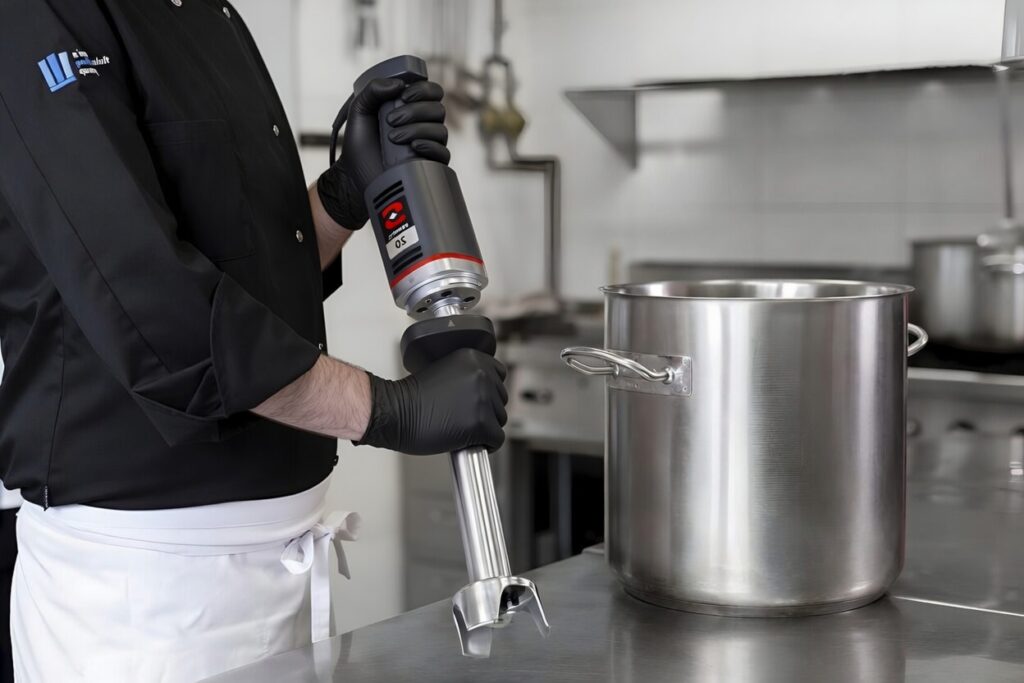
Immersion Blender Method (The Line Favorite):
1. Place all ingredients except the oil into a tall, narrow container.
2. Pour the oil directly on top so it floats.
3. Drop the immersion blender flat to the bottom, turn it on high, and slowly pull it upward as the thick cream forms. Foolproof.
=========================================
THE PLATING UPGRADE: RED PEPPER COULIS
=========================================
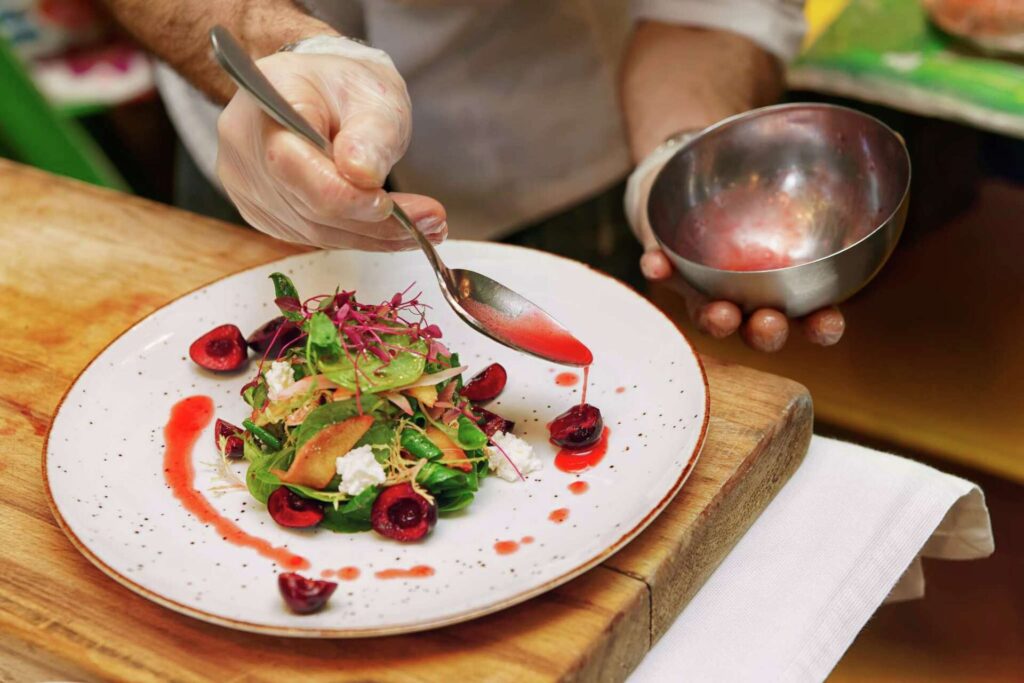
A coulis or drizzle sauce adds color, acidity, and visual pop to a plate. This is the upgrade that elevates a presentation and justifies a higher menu price because it keeps the plate looking tight and clean without bleeding moisture.
Ingredients:
– 2 large red bell peppers (roasted, peeled, and seeded)
– 1 small shallot, chopped
– 1 garlic clove
– 2 tbsp olive oil
– 1 tbsp red wine or sherry vinegar
– 0.5 tsp salt
– 0.25 cup chicken or vegetable stock (just enough to blend)
– 1 tsp Dijon mustard (for emulsion stability)
Method:
1. Blend the roasted peppers, shallot, garlic, oil, vinegar, salt, and stock on high speed until completely smooth.
2. Pass the sauce through a fine-mesh chinois for a flawless texture.
3. Return the strained sauce to the blender, add the Dijon mustard, and spin on low. This light emulsion ensures the sauce holds its shape in a squeeze bottle and won’t separate on a hot plate during service.
Application:
– Squeeze a clean pool in the center of the plate and use an offset spatula to create a sharp smear.
– Apply precise dots around the rim or drag a toothpick through them for clean geometry.