Clean As You Go: The Brutal Truth Every Chef, Line Cook, and Server Needs Tattooed on Their Forearm
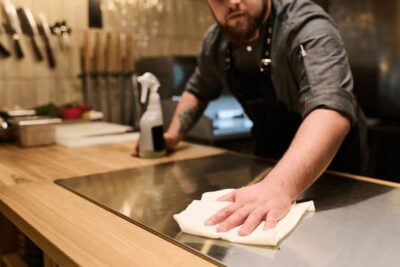
Look, if you’re slinging plates in this hospitality game; whether you’re a chef grinding out tickets on the line, a cook buried in it, or a server dodging tables during a 300-cover Friday night, you already know the drill. Or you should. “Clean as you go.” Never let your station get messy. Wipe down surfaces, clean spills immediately, and keep your tools organized. Sounds simple, right? Like some corporate poster bullshit. But in the real world of screaming printers, 500-degree ovens, and guests who expect perfection while you’re knee-deep in chaos, this one habit is the difference between running a tight ship and watching your shift implode.
I’ve worked every station from sauté to garde-manger, trained green line cooks who thought “clean later” was a strategy, and watched servers turn FOH into a war zone because they couldn’t be bothered to bus and wipe between tables. Clean as you go isn’t a suggestion; it’s survival. It’s food safety 101 baked into muscle memory. Leave raw chicken juice on a cutting board for five minutes and you’re one cross-contamination away from a health inspector nightmare or, worse, sending someone to the hospital. Regulations like the UK Food Hygiene rules hammer this home for a reason: dirt and clutter breed bacteria faster than a Saturday rush breeds attitude. But forget the regs for a second. In practice, it’s about speed and sanity.
Take the line cook life. Your station is your kingdom; six-twelve burners, a flat-top, a salamander breathing fire down your neck. You’ve got mise en place prepped like a surgeon’s tray: diced shallots in one hotel pan, chopped herbs in another, proteins portioned and labeled. The second you fire a dish; say, searing a ribeye while the veg guy drops broccoli, you don’t just plate and move on. You scrape the board, wipe it with sanitizer rag, rinse the knife, and reset. Spilled sauce? Mopped before it becomes a slip hazard. Used tongs? Back in their spot, not piled like some home-cook disaster. Pros do this between every ticket because when the rush hits, tickets stacking like Jenga; you’re not hunting for a clean pan or a dry towel. Your hands move on autopilot. Cluttered station? You’re slowing down, burning shit, calling for backups you don’t need. I’ve seen cooks lose their minds because they let their area turn into a battlefield. Clean as you go keeps you lethal.
Chefs on the pass see it clearest. The executive or sous isn’t just tasting sauces; they’re scanning stations like hawks. A messy line means sloppy plates, late tickets, and a kitchen that looks like amateurs. One old-school chef I worked for would straight-up toss your mise if it wasn’t pristine mid-service. Harsh? Yeah. Effective? Absolutely. It forces ownership. Every cook owns their six feet of steel. No excuses. And it cascades: dishwashers thank you because you’re not dumping a mountain of crusted pans at close. The whole brigade moves smoother.
Servers, don’t think this is just BOH gospel. Your section is your station too. Tables don’t reset themselves. Crumbs on a banquette after the four-top bails? Wipe it now, not after you drop the next check. Bus tub full? Empty it before it becomes a tower of shame blocking the aisle. Sanitize that high-top between seatings because the next guest doesn’t want last table’s lipstick on the glass rim. In FOH, clean as you go means you’re not scrambling during turnover, you’re turning tables faster, and your tips reflect it. I’ve watched veteran servers glide through doubles because their section stayed tight; rags in apron, sanitizer spray always holstered, bus tubs labeled and rotated. The sloppy ones? They’re the ones sweating, apologizing, and watching covers walk out frustrated.
Why do so many newbies ignore it? Ego, mostly. They think “real cooking” is the flame and the flair, not the wipe-down. They stack dirty ramekins like it’s a badge of honor. By midnight, their station looks like a bomb went off and they’re cursing the world instead of owning the mess they created. Veterans laugh because we learned the hard way: one slip on a grease puddle or a 20-minute hunt for a whisk during peak can tank your whole service. Clean as you go buys you time, reduces stress, and keeps the whole operation humming. It’s efficiency disguised as discipline.
Bottom line: in this business, the kitchen doesn’t stop for anyone. No one’s coming to clean up after you mid-rush. Make it instinct; rag in hand, eyes scanning, station reset after every move. It’s not glamorous. It’s not the sexy part of the job. But it’s what separates the cooks who last from the ones who flame out. Chefs, line dogs, servers; own your space, respect the flow, and watch how the whole house elevates. Clean as you go. Live it. Or get left in the weeds.
Be sure to join us, register for
Cooks Corner fourm board.
Any registration issues info@ralphviola.com
15 Minutes Early: The Only Way to Be ‘On Time’ in Restaurants